

With Pokémon cards becoming more valuable than ever, counterfeit products have become increasingly common. Fake cards, fake booster packs, and even resealed products are appearing across online marketplaces, making it harder for collectors to know exactly what they’re buying.
I’ve opened thousands of real Pokémon TCG packs, as well as ripped some fake ones (intentionally), so I’ve seen both genuine and counterfeit Pokémon products first-hand, which makes spotting the warning signs much easier. If you’re looking to avoid the inevitable regret of buying fake products, I’m here to help.
Quick Summary
The main advice remains “if it seems too good to be true, it probably is”. However, if you’re still unsure, here’s some quick tips:
Fake cards:
• Poor print quality
• Missing texture
• Incorrect colours
• Strange fonts or text
Fake packs:
• Poor image quality
• Incorrect seams
• Wrong card contents
• Unusual foil wrapping
Resealed products:
• Loose shrink wrap
• Signs of glue
• Damaged seals
• Packaging that feels opened and reassembled
Below, I’ll show real examples of counterfeit cards, fake packs, and resealed products, along with the warning signs I’ve encountered as a collector.
However, if you’re confused and want some personal opinions on whether it’s a fake or not, I’d recommend reaching out to me via email (callum@kantopost.com) or using the r/IsMyPokemonCardFake subreddit.
How to spot fake Pokémon cards
There are a few ways to spot a fake Pokémon card. First and foremost, trust your instincts - if it’s an expensive modern chase or a vintage card, and it seems off, don’t write it off yet, but it’s worth checking a few things
Read the text
- Check to make sure fonts match up with a real example
- Check for grammatical errors or wrong information (eg. Pocket Monsters instead of Pokémon on international cards)
- Make sure the name matches the Pokémon in the artwork
- Any ‘Pokémon’ without the accent over the ‘e’
- Odd HP and damage numbers, especially HP at ridiculously high amounts
Reading the text is an excellent way to discover whether a card is bogus or not. The issue is, as fakes have become more prevalent, issues with font, random text, or mistakes have become less common. It still remains a reliable way to check, but it’s not as useful as it once was.
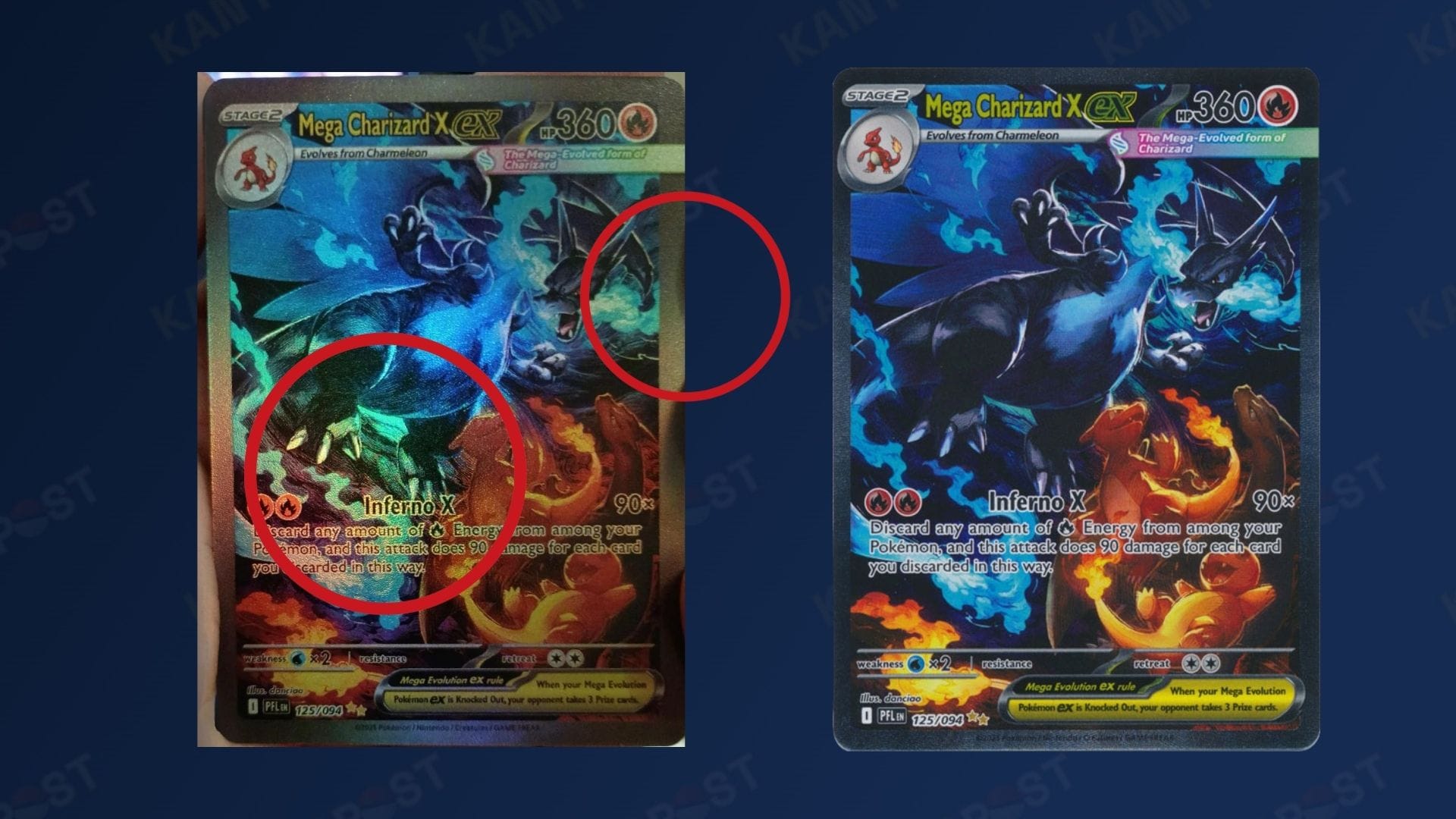
Compare it to a photo / real card
- Wrong HP, attack, or weakness and retreat values
- Wrong set details, including number or symbol
- Missing holo layer (or having one when it shouldn’t)
- Texture issues
- Weird font and text size problems
The best method to compare a real to a fake is to, well, compare them. Search up online any cards you’re looking to buy, and compare photos to the listing. Or, if you or a friend happen to own the intended card already, using that as a basis is a good idea.
Sadly, if you’re looking to buy a chase card, chances are you don’t already own it. That makes the comparison a little less reliable, meaning you’ll need to ensure both the photo of the card you’re buying and the one you’re using to compare are both real.
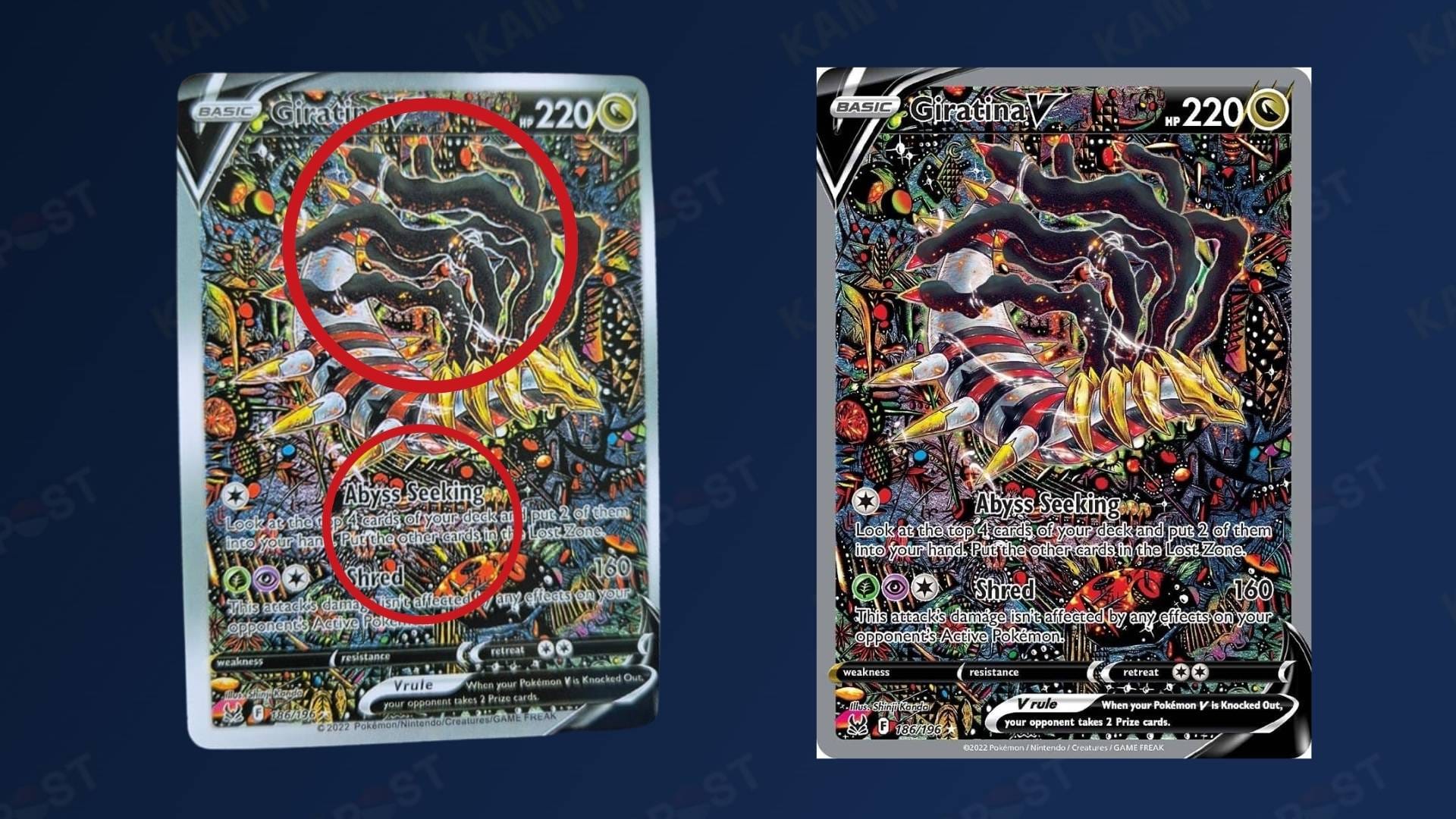
Check the texture
- Premium cards should have visible texture
- The texture should match the artwork
- Flat cards of textured rarities are a major red flag
Modern Pokémon cards often use texture to create depth in the artwork. Special Illustration Rares, Hyper Rares, and many full-art cards should have a distinct pattern that follows the image. Counterfeit cards frequently miss this texture entirely, or apply a generic pattern that doesn’t match the authentic card.
This is one of the easiest ways to spot a fake modern chase card. If a Moonbreon, Bubble Mew, or Giratina V Alt Art looks completely flat, alarm bells should be ringing.
Compare the backs
- Check to ensure the colours match with an authentic card (especially the shade of blue)
- Fakes will have slightly darker or a lighter border
- Avoid cards with washed out backs
- No edge bleeding - the border should be separate
Pokémon card backs have been the same for decades, meaning that comparing cards using the backs is a reliable way to check if a card is fake or not. There’s been some examples that don’t use the standard back design, and Japan has its own version, but international Pokémon cards follow the same format.
Borders could also be massively off centre. However, I didn’t include this as it could be a misprint or a miscut, which would deem it as an error card. You can use the r/PokemonMisprints community to see if it’s an error or a fake, or go with CGC, one of the best Pokémon grading services for error cards.
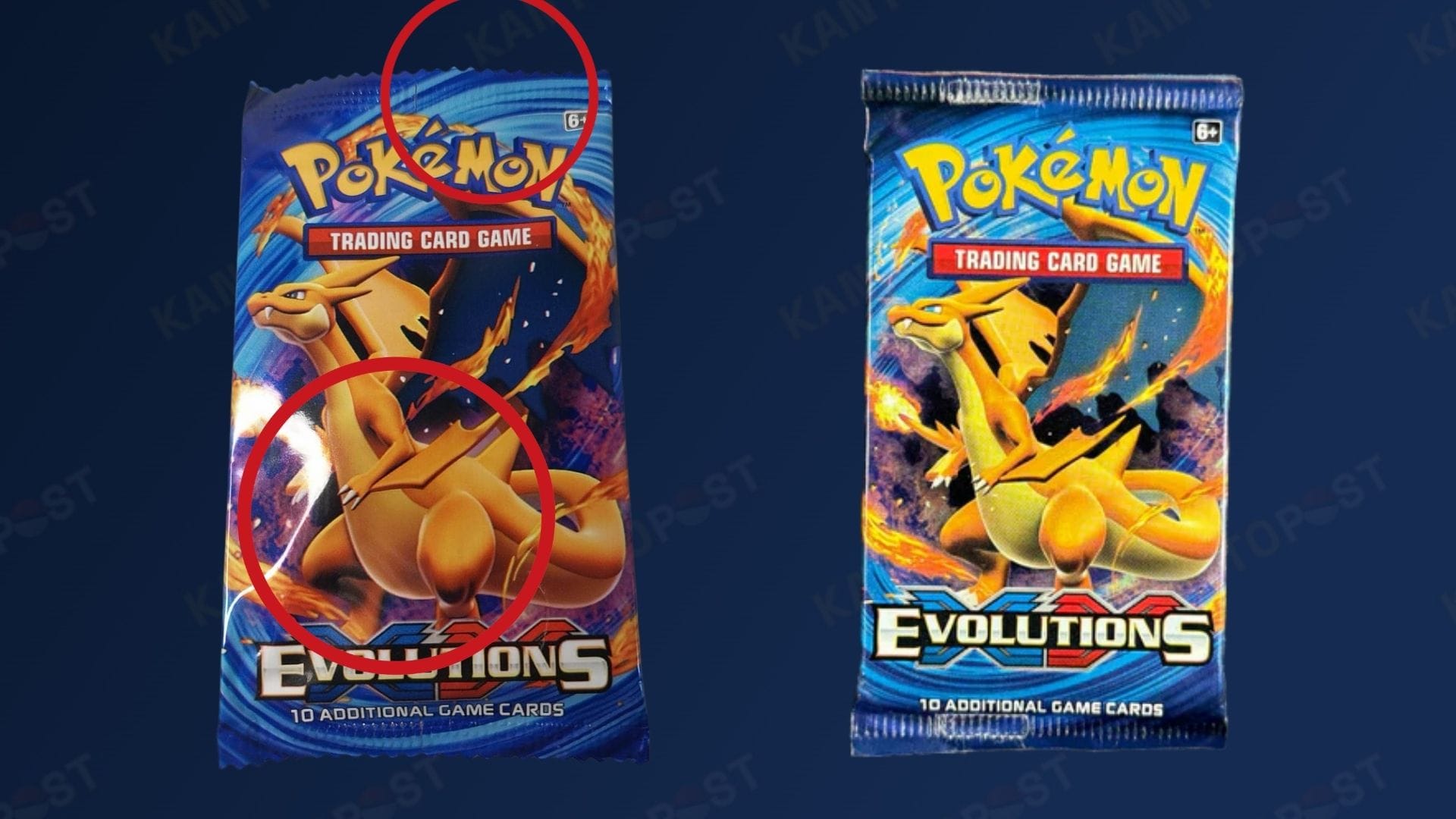
How to spot fake Pokémon packs
Discovering whether a Pokémon pack is fake or not is slightly different to checking a card, but many of the rules remain the same. That’s right, you’re checking text, quality, and more.
Check the booster pack itself
- Make sure the font and text are all accurate, with no grammatical, spelling, or size issues
- The print quality of the image is defined and clear
- References to other expansions instead of the one it’s supposed to focus on
- Images from other Pokémon sources, including videogames or the anime
- A perforated edge instead of straight
From personal experience, fake packs are far lower quality than fake cards, making them easier to differentiate. Counterfeit boosters will be flimsy, have wavy edges that are meant for tearing instead of the typical way to open a Pokémon pack, and the wrapping will feel off.
Although, if you’ve spotted some issues but not all of them, the next best step is to actually open the pack…
Fake cards and wrong orders
- Check for fake cards in the pack using the examples above
- Make sure there’s the correct amount of cards and that they’re in the right order
- Make sure cards from the set are consistent
Based on my own experience of opening fake packs, the tell should be instantly obvious. Firstly, it had ex cards and Illustration Rares front loaded in the order of the pack, which isn’t typical - modern packs usually have seven standard cards followed by three rare or above, then an energy. On that note, they didn’t even have any energy cards.
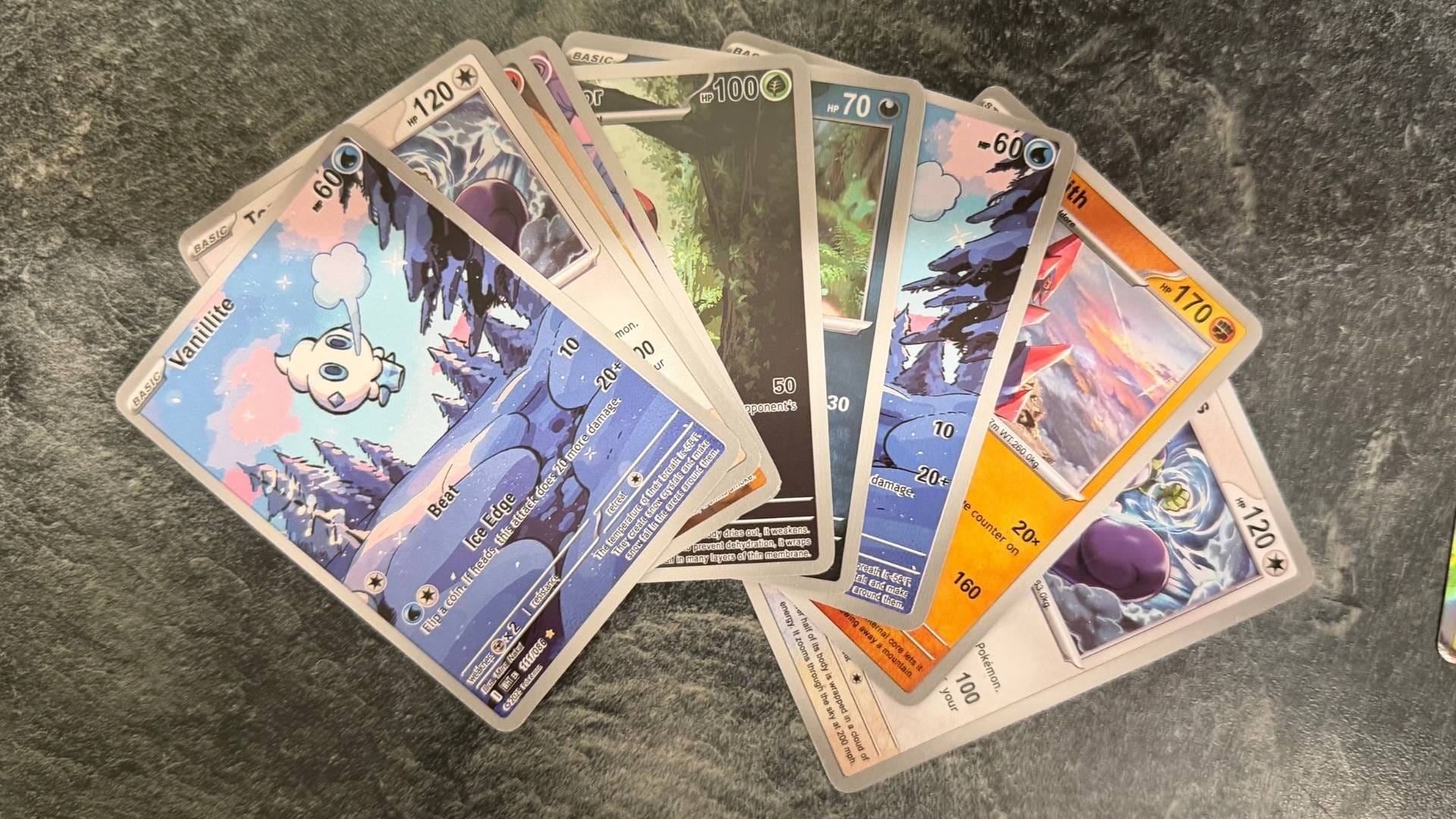
I opened a fake White Flare pack and got a card that was fake, but also limited to the Journey Together Pokémon set. As you may expect, The Pokémon Company wouldn’t typically make this type of mistake. And even if it did, it wouldn’t be a fake card.
How to check if a Pokémon booster box or ETB is resealed
Check the wrap
- Modern products should have Poké Ball shrink wrap
- Wrap should be tight
- Excess wrinkles can indicate tampering
Check the contents
- Missing promos
- Wrong pack counts
- Loose packs
- Missing dividers
Check the smell
- Burnt plastic smell
- Glue smell
- Chemical odours
Resealed products are arguably more frustrating than fakes, because the products are real - they’ve just been replaced and resealed to give the illusion they’re brand new. Chances are, any of the great chase cards have already been taken.
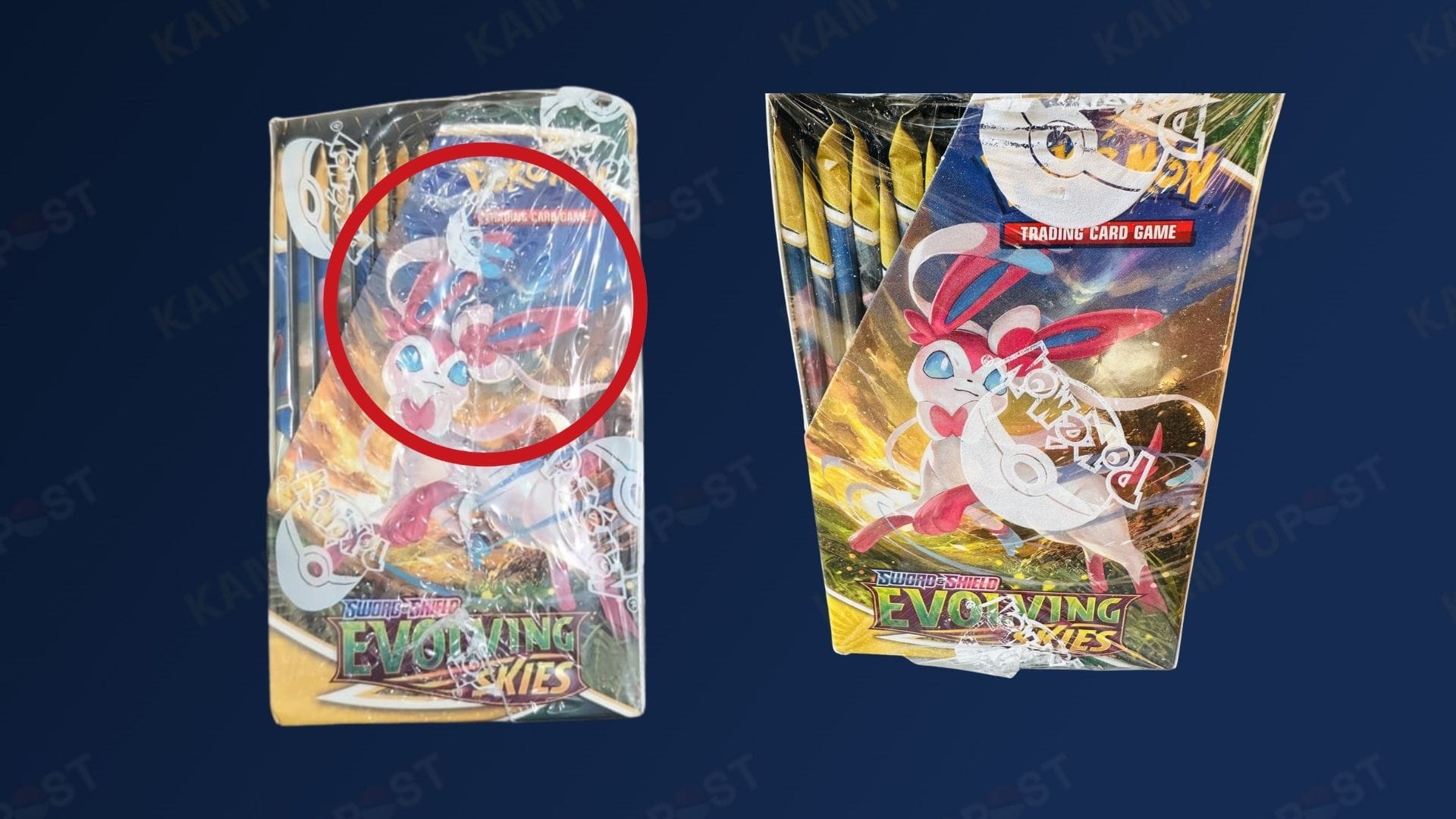
However, there are still warning signs. A convincing reseal might not show every red flag, but it’s rare for a tampered product to show none of them. Someone resealing the product could be perfect at recreating the wrap, but they may mess up with pack orders or leave the packs loose in the booster box. It may also be a sign of a reseal if you have a terrible hit rate.
Or you could just be opening Evolving Skies. That pull rate was dreadful.
FAQs
Can fake Pokémon cards be worth anything?
99% of the time, fake Pokémon cards aren’t worth anything at all. Due to being counterfeit products, most collector, local card shops, and investors won’t touch fake products, so there’s no real value there.
However, there’s a niche, very small market for novelty fakes. Some vintage fake cards are ridiculous in their falsehood, so they can be wanted by certain collectors. That being said, the general answer is a resounding no - counterfeit cards can’t even be played competitively.
There is an audience that will purchase dedicated proxies. These are intentional replicas that usually have different holos or textures on purpose, so they can’t be sold as real chases. The line between proxy and fake cards is quite thin, but usually, proxies are sold intended to be replicas - fake cards are sold for the purpose of scamming.
Can PSA grade fake Pokémon cards?
No, PSA will not grade fake Pokémon cards. While there have been reports of the occasional fake making it through the authentication process, in reality, it’s a ridiculously small amount that gets through.
Grading companies have a responsibility to ensure all cards are legitimate, so grading fake cards would seriously jeopardise their authenticity.
What happens if you send a fake card to PSA?
If you send a fake card to PSA or any grading company, it’ll be sent back and marked as inauthentic or rejected. It’s not worth doing, either, as you won’t be refunded the fees paid to grade the card, and in some situations, the company will permanently mark it so that it can’t be sold or traded.


