

Pokémon card trading became so intense at my school that it was eventually banned. Between games of Yu-Gi-Oh! and flipping through binders full of Pokémon cards we had managed to pull or trade for, those memories remain unmatched to this day. I remember trading a Blue-Eyes White Dragon for a Rayquaza ex from Dragon Frontiers, and neither of us cared about the value behind the cards. We traded because we thought the artwork looked cool.
Now, it’s hard to ignore how much the hobby has changed.
There’s no shortage of posts across Pokémon TCG subreddits where a child pulls an incredible chase card, only for the conversation to immediately become about “what it’s worth” or whether the child “won” the trade. Like many modern trading card games, Pokémon has become wrapped up in a market driven by value, speculation, and scarcity. It’s no longer just about collecting your favourite Pokémon or owning beautiful artwork - it’s about what can sell for the most on eBay.
More importantly, the current obsession with profit strips away the kind of memories that made the Pokémon TCG special in the first place - especially for kids discovering the hobby for the first time.
I can’t even pretend to look at this objectively. I’m part of the problem, too. Over time, I’ve had to consciously change the way I approach collecting in order to stop chasing the disappointment of poor “returns”. Part of that meant refusing to sell cards unless I genuinely needed the money. The other part was learning to appreciate the cards themselves again.
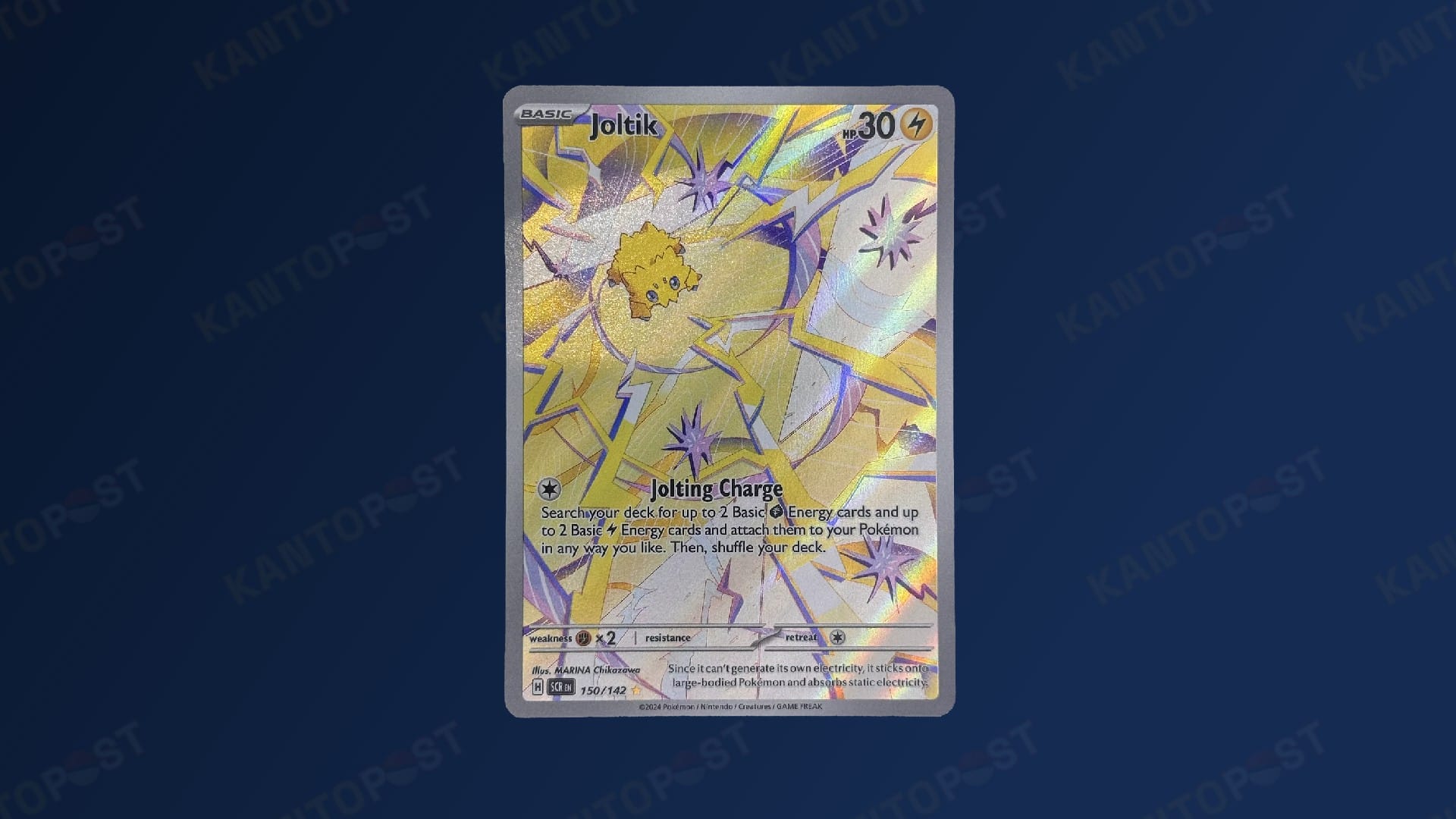
One of my favourite cards is still a Joltik Illustration Rare from Stellar Crown. It’s nowhere near the most expensive card in the set, but my wife bought me the pack containing it when I was having a bad day. That memory gives the card more value to me than any price tag ever could. I’ll never sell it.
Skyrocketing card values fuel the problem of investing and scalping. Many people would rather keep booster boxes sealed or resell them at inflated prices than actually open them. There’s always the possibility of pulling a Mega Charizard X ex or another modern grail card like Moonbreon, and that possibility alone drives the market.
Personally, I couldn’t do it. Having sealed boxes sitting in my attic would drive me insane. Pokémon cards are meant to be opened.
When I was a bright-eyed seven-year-old, I never thought, “How do I trade my way towards the most expensive card in the set?” Instead, I thought, “How do I get the coolest-looking Pokémon from my friends?” Usually, the answer was simple: I traded them cards they liked in return. If my friend liked Charizard and I liked Giratina, then everybody won.
I could look back now and regret not storing away cards worth thousands today, but I’d rather hold onto the memories instead. Those moments became a core part of my childhood, and they’re a major reason why I still love the franchise more than two decades later.
The difficult reality is that this culture probably isn’t changing any time soon. Even news coverage - including articles written by me - often revolves around secondary market value, whether we’re discussing vintage classics or modern chase cards. Family members ask me about articles I’ve written before, immediately asking how much the cards are worth. Once, a carpet cleaner spotted me drafting a Pokémon TCG article and proudly told me his nephew had “enough cards in the attic to buy a house”.
Vintage cards will always carry value, partly because most children treated them casually back in the day. Cards were traded endlessly, shoved into pockets, bent in playground battles, or lost entirely. Modern cards, however, shouldn’t be reaching these kinds of prices so consistently.
In an ideal world, if The Pokémon Company dramatically increased the pull rates for Special Illustration Rares - perhaps to one in every ten packs - prices would collapse overnight. Collectors and fans would still enjoy the cards, but the speculative frenzy surrounding them would lose much of its power.
Of course, people would still buy and sell cards on the secondary market. That will never disappear completely. But would the obsession become quite this extreme? Probably not. At times, it’s almost embarrassing watching adults fight over Pokémon cards as though they’re scrambling for their last meal. Whenever I miss out on a new set, I’m disappointed too, but eventually I move on and wait until stock returns to retail shelves. It’s not the end of the world.
Of course, I still love opening new expansions, and if you do too, it’s worth signing up for our newsletter above for the latest updates on upcoming releases. You can also join the Kanto Post Discord to chat with other trainers and keep up with new announcements.


