

Considering you’re reading Kanto Post, it should be unsurprising that I’m a bit of a Pokémon TCG fanatic. Part of that comes from years of loving the franchise itself, but another part is the familiar thrill of the chase - hunting down rare and valuable cards that feel almost impossible to pull. However, the KPop Demon Hunters cards reminded me that collecting can still feel exciting, even when expensive rarity is not the main incentive.
I’m not about to throw my Pokémon binders into the attic in favour of building master sets of KPop Demon Hunters cards. I still love pulling Pokémon hits, and I probably always will. But opening these cards made me realise that my long-running “more SIRs would be better” take is not just wishful thinking. It could genuinely make the hobby feel healthier for collectors.
SIRs are not really gameplay mechanics or competitive necessities in the Pokémon TCG. They exist for collectors. If you’re playing competitively, the standard versions of cards do the exact same thing. The rare variants simply exist to keep people opening packs, and honestly, there’s nothing wrong with that.
Even if The Pokémon Company put an SIR in every pack, people would still chase the specific cards they actually want. Collecting would not suddenly disappear overnight. But while Pokémon leans heavily into scarcity and high-value hits, the KPop Demon Hunters cards from Kayou feel designed around a much simpler idea: make every pack enjoyable to open.
Even without pulling the rarest cards of Rumi, Huntrix, or the Saja Boys, the lower-rarity cards still feel exciting. The colours pop, the layouts are stylish, and even the basic designs feel distinct. Pokémon cards can absolutely look great too, but most sets clearly reserve their best artwork and presentation for the high-end pulls.
That difference becomes especially noticeable once you hit the consistent SSR cards, like the Your Idol version of Jinu. Every pack feels rewarding in some way, even if you miss the biggest hits entirely. There may not even be a game attached to these cards, but they still capture that “just one more pack” feeling through presentation alone.
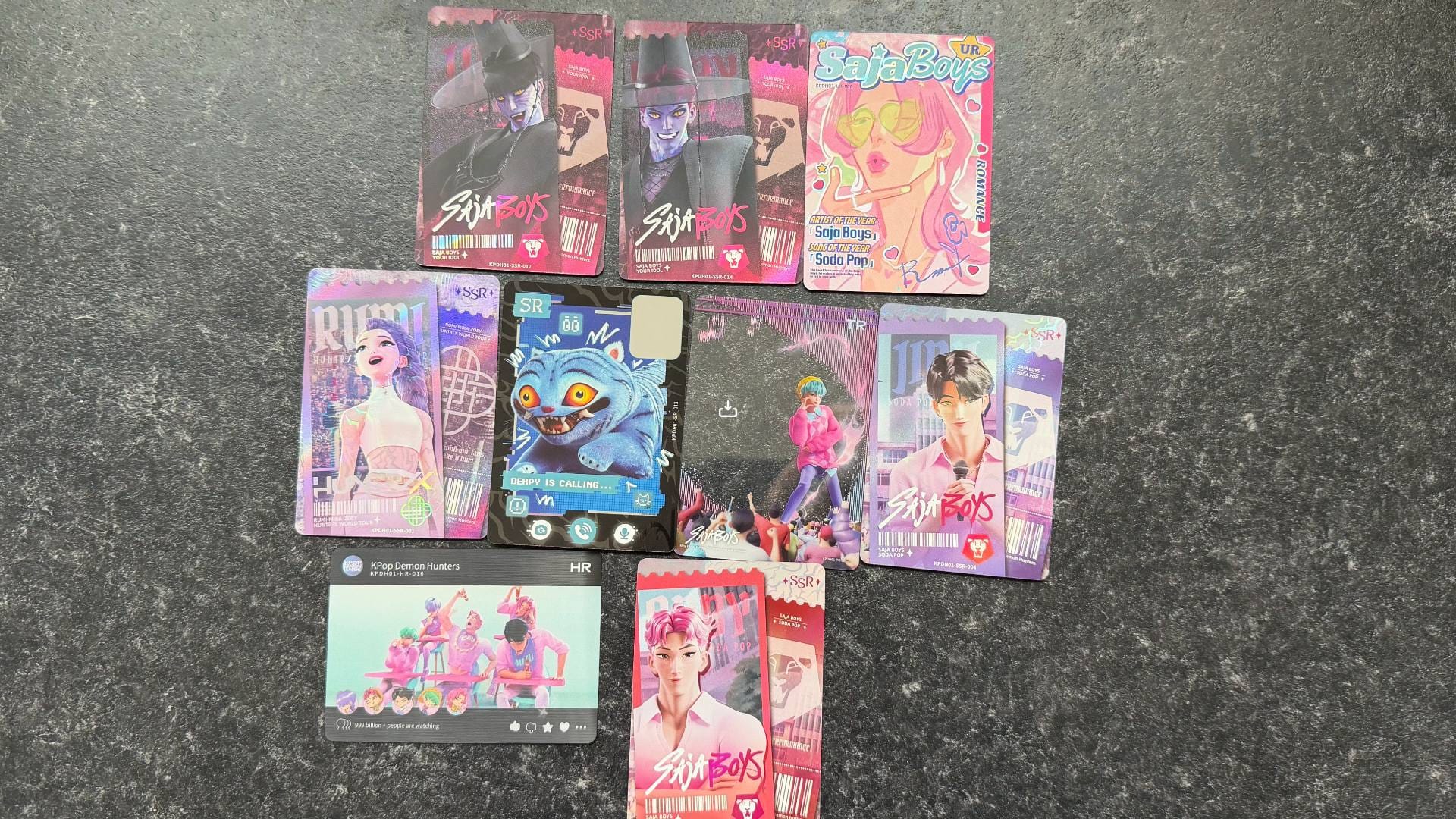
Meanwhile, completing a Pokémon set increasingly feels like a task for die-hard collectors. Between product shortages, inflated secondary market prices, and pull rates built around a handful of expensive chases, casual fans are often encouraged to focus on the hits and ignore everything else.
That said, there is a trade-off. Easier pulls do make the biggest hits feel less special. Pokémon TCG has perfected the dopamine rush of finally pulling a chase card after dozens of packs, and those moments genuinely stick with you. I can vividly remember some of my biggest Pokémon pulls, whereas I cannot really say the same for KPop Demon Hunters cards yet.
Still, this whole thing has made me rethink how I view collecting. The fact I’m sitting awake at 1 am thinking “Pokémon packs should probably contain more cool cards” is admittedly the most 21st-century problem imaginable, especially after spending hours playing Legends Z-A. But after opening KPop Demon Hunters cards, I’m more convinced than ever that modern Pokémon sets rely a little too heavily on scarcity to create excitement.
Sorry, The Pokémon Company.


